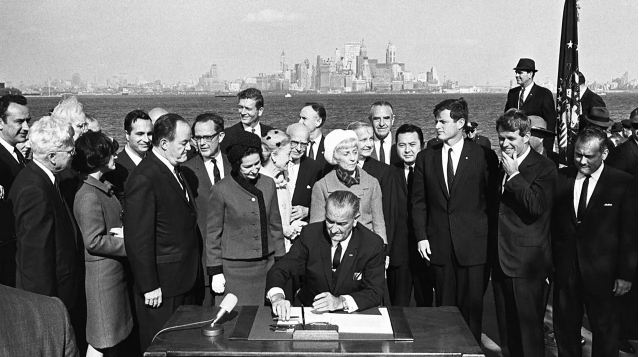
The Immigration and Nationality Act (INA) is a key body of U.S. law that governs immigration and citizenship. It was originally enacted in 1952 and has since undergone numerous amendments to reflect changing policies and societal views. The INA consolidates and codifies many previous immigration laws into one comprehensive document. Here’s an overview of its primary components:
Key Provisions of the INA:
- Immigration Visa Categories: The INA defines categories of immigrants and non-immigrants who are allowed to enter the United States. It sets out criteria for obtaining different types of visas, such as:
- Family-sponsored visas: for individuals sponsored by a U.S. citizen or lawful permanent resident family member.
- Employment-based visas: for foreign workers based on specific employment categories.
- Diversity visas: for individuals from countries with historically low levels of immigration to the U.S. (Diversity Visa Lottery).
- Refugees and Asylees: admission for individuals fleeing persecution or seeking asylum.
- Numerical Limits and Preferences: The INA establishes annual numerical limits for immigration categories, particularly for family and employment-based immigration, and creates a preference system that prioritizes certain relatives and workers over others.
- Naturalization and Citizenship: The INA outlines the requirements for naturalization—the process by which a foreign national becomes a U.S. citizen. This includes residency requirements, language and civics knowledge, and a demonstration of good moral character.
- Removal (Deportation) and Exclusion: The INA details the grounds on which non-citizens may be removed from the U.S. This includes violations like overstaying a visa, committing certain crimes, or breaching immigration laws. It also lays out processes for deportation, appeals, and relief from removal.
- Immigration Enforcement: The law gives authority to agencies like U.S. Customs and Border Protection (CBP), U.S. Citizenship and Immigration Services (USCIS), and U.S. Immigration and Customs Enforcement (ICE) to enforce immigration rules, manage visa applications, and deport unauthorized immigrants.
- Changes Over Time: The INA has been amended several times to adapt to new challenges, such as:
- Immigration Reform and Control Act of 1986 (IRCA), which imposed penalties on employers hiring undocumented workers.
- Illegal Immigration Reform and Immigrant Responsibility Act of 1996 (IIRIRA), which toughened penalties for immigration violations and restricted judicial review of deportation cases.
- Deferred Action for Childhood Arrivals (DACA), implemented by executive action, though it’s not part of the INA, it offers temporary protection from deportation for certain young undocumented immigrants.
In summary, the INA is a comprehensive law that regulates who can enter and stay in the U.S., how they can become citizens, and under what circumstances they may be deported or excluded. It remains central to U.S. immigration policy and law enforcement.